What is Content Gap?
TL;DR
A content gap is a topic, keyword, or question that your target audience searches for but your website doesn't address, while your competitors do. Content gap analysis systematically identifies these missed opportunities by comparing your ranking keywords against competitors. Filling content gaps builds Topical Authority, captures traffic competitors are getting, and serves users who are currently leaving your site empty-handed.
On this page
Why Content Gap Matters
Every content gap represents:
- Lost traffic: Visitors going to competitors instead of you
- Lost conversions: Potential customers who never see your brand
- Lost authority: Topics where competitors look more comprehensive
- Lost internal linking opportunities: Pages you can't link to because they don't exist
The strategic value: Content gaps aren't just keyword opportunities. They reveal where your content strategy is incomplete. If three competitors all have pages on "emergency plumbing" and you don't, that's a signal the market (and Google) expects this content from a plumbing company.
Real example: An accounting firm might rank well for "tax preparation services" but discover competitors also rank for "small business bookkeeping," "quarterly tax estimates," and "IRS audit help." Each gap represents clients who need those services but never find this firm.
How Content Gap Works
Content gap analysis follows a systematic process:
Step 1: Identify your real competitors
Not just business competitors. SEO competitors (sites ranking for your target keywords). A local plumber competes with Angi, HomeAdvisor, and other plumbers, not just the plumber down the street.
Step 2: Extract competitor keywords
Using tools like Ahrefs or Semrush, pull the keywords each competitor ranks for (positions 1-20). Export these lists.
Step 3: Compare against your keywords
The tools can automatically show: "Competitor A ranks for these keywords, Competitor B ranks for these, but you rank for none of them."
Step 4: Filter for relevance
Not every gap is worth filling. Filter for:
- Keywords relevant to your business
- Keywords with reasonable search volume
- Keywords you can realistically rank for
- Keywords with commercial intent (if that's your goal)
Step 5: Analyze search intent
Before creating content, check what Google currently ranks for each gap keyword. The existing results show you what format and depth Google expects.
Step 6: Prioritize and create
Rank gaps by impact (volume × relevance × difficulty) and create content starting with the highest-priority gaps.
Content Gap Best Practices
-
Look beyond direct competitors. Include content publishers and aggregators in your analysis. A local plumber should analyze not just competing plumbers but also sites like HomeAdvisor, Angi, and This Old House.
-
Don't fill every gap immediately. Prioritize gaps that support your core services and have commercial intent. Informational content builds authority, but transactional gaps drive revenue.
-
Check existing pages first. Sometimes you have content on a 'gap' topic, but it's not ranking. Improving existing content is often faster than creating new pages.
-
Group related gaps into content clusters. If you find gaps for 'tankless water heater cost,' 'tankless vs tank water heater,' and 'tankless water heater installation,' plan these as a cluster, not isolated pages.
-
Consider gap difficulty. A gap where 5 competitors rank with high-authority pages is harder to fill than one where only 1 competitor ranks with a mediocre page.
-
Re-run analysis quarterly. Competitors add content, search trends change, and new opportunities emerge. Content gap analysis isn't one-and-done.
Common Content Gap Mistakes to Avoid
-
Filling gaps with thin content. A 300-word page addressing a gap still won't rank. Create content as comprehensive as (or better than) what competitors have.
-
Ignoring search intent mismatch. If the gap is for an informational query and you create a sales page, you won't rank. Match the content type to what Google shows in results.
-
Treating all gaps as equal. A gap for a high-volume, high-intent keyword is worth 10x more than a gap for a low-volume, low-intent keyword. Prioritize ruthlessly.
-
Not connecting new content to existing pages. Filling a gap creates a new page that should be linked from related existing content. Orphan pages don't build authority.
-
Creating content for gaps outside your expertise. If competitors rank for something unrelated to your business, that's not a gap you should fill. It's outside your Topical Authority.
Recommended Content Gap Tools
Enter your domain and up to 10 competitors. Shows keywords they rank for that you don't. The most straightforward gap analysis tool.
Similar to Ahrefs but with additional filtering options. Part of the broader Semrush competitive analysis suite.
Check queries with impressions but low/no clicks. These are gaps where you're almost ranking, often the easiest to fill.
Visualizes 'People Also Ask' questions in a tree structure. Great for finding question-based content gaps.
Frequently Asked Questions About Content Gap
How often should I do content gap analysis?
Full competitive gap analysis quarterly. Lighter monitoring (checking Search Console for new opportunities) monthly. Markets and competitors change constantly. What wasn't a gap 6 months ago might be one now.
What if I find hundreds of content gaps?
Prioritize aggressively. Sort by search volume × commercial relevance. A gap for 'emergency plumber near me' (high intent, high volume) matters more than 'history of plumbing' (informational, low volume). Start with 10-20 high-priority gaps and work systematically.
Should I create content for gaps where competitors have low-quality content?
Yes, these are your best opportunities. If competitors rank with thin, outdated, or poorly written content, you can often outrank them quickly with a genuinely excellent page. Easy wins.
Can content gaps reveal problems with existing content?
Absolutely. If you have a page on a topic but it's appearing as a gap (competitors rank, you don't), your page has issues. Check for thin content, technical problems, or [[content-cannibalization]] with other pages on your site.
How do I find content gaps if I don't have premium SEO tools?
Manual method: Search your target keywords in Google and note which competitors appear. Visit their sites and catalog their content. Compare against yours. It's time-consuming but free. Also use Google Search Console to find queries with impressions but low rankings. These are gaps where you're close.
Terms Related to Content Gap
Content Cannibalization
Content cannibalization occurs when multiple pages on your website target the same keyword or topic, forcing them to com...
Read definition SEOKeyword Research
Finding out what your potential customers are already searching for, then building content that shows up when they searc...
Read definition SEOSearch Intent
The purpose or goal behind a user's search query. Understanding search intent is critical for Keyword Research and On Pa...
Read definition SEOTopical Authority
Topical authority is Google's assessment of how deeply your website covers a specific subject area. A site with comprehe...
Read definition SEO301 Redirect
A permanent redirect that tells browsers and search engines "this page has moved forever, go here instead." When someone...
Read definition SEO302 Redirect
A temporary redirect that tells search engines "this page has moved for now, but it's coming back." Unlike a 301 Redirec...
Read definitionFeatured SEO Case Study

How a CPA Firm Captured 991 Top-3 Google Rankings and 175 AI Overview Citations
Strategic website redesign and content architecture helped an established Colorado Springs CPA firm dominate both traditional search and AI-powered results, with 991 keywords in the top 3 and 175 AI Overview citations.
More SEO Case Studies
 Featured
Local SEO Case Study: From Invisible to #1 Across 100 Miles in 6 Days
From invisible to #1 across 100 miles in 6 days

How 50 Monthly Searches Turned Into a Fully Booked Consulting Business
From zero online presence to fully booked in 6 months, zero ad spend
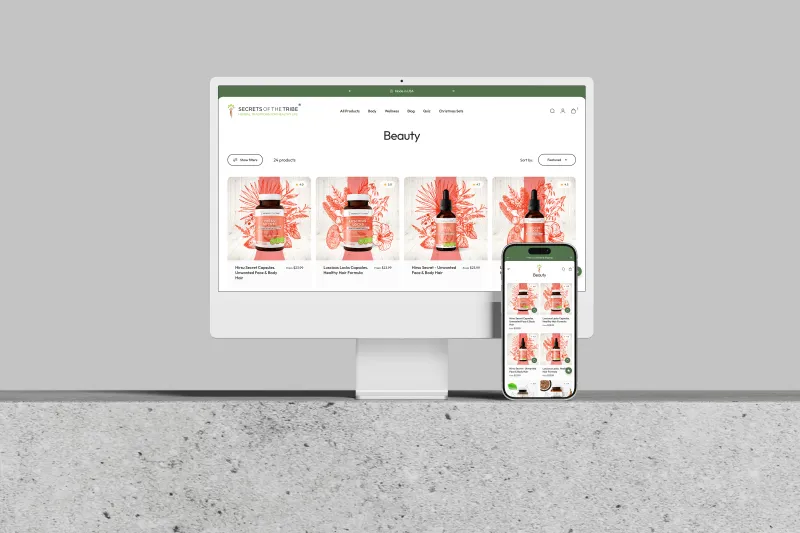
Secrets of the Tribe: From Basic Template to 49 Position 1 Rankings in 3 Months
#1 on Google for 49 searches in just 3 months

E-commerce SEO Case Study: From $28,800 in Annual Ad Spend to 7,500+ Monthly Organic Visitors
Stopped paying $2,400/month in ads, now gets 7,500 visitors free
 Featured
How a Forced Name Change Became the Best Thing That Happened to a Colorado Springs Epoxy Company
From invisible online to #1 across a 25-mile radius, fully booked, and expanding into commercial

Website Redesign for a Regenerative Medicine Clinic That Actually Converts
Patients now book online instead of calling to ask questions
Ready for Results Like These?
Let's talk about how seo can drive real growth for your business.
Get a Free ConsultationSEO Articles
View All Posts »
The Complete SEO Guide for Small Businesses (2026)
Everything a small business owner needs to know about SEO in 2026. Real strategies, honest timelines, and actual results from businesses like yours.

How to Build a Local SEO Strategy That Actually Works in 2026
A comprehensive guide to local SEO in 2026, covering Google Business Profile optimization, citation building, review management, and the tactics that actually move rankings for small businesses.

SEO vs PPC – How to Choose the Right Strategy for Your Small Business Marketing
Should you invest in SEO or PPC for your small business? This comprehensive guide breaks down both strategies, their costs, benefits, and when to use each.

SEO Guide: Google's 2025 Quality Guidelines Explained for Business Owners
Learn how Google's E-E-A-T quality guidelines actually work and how to use them to outrank competitors in local search results.

10 Website Design Mistakes Killing Your SEO (2025)
Discover the most common website design mistakes that hurt your SEO rankings and learn how to fix them for better traffic and conversions.