What is Search Intent?
TL;DR
The purpose or goal behind a user's search query. Understanding search intent is critical for Keyword Research and On-Page SEO because Google aims to serve results that best match what users are looking for. The four main types are informational (seeking knowledge), navigational (finding a specific site), commercial (researching products), and transactional (ready to buy).
On this page
Why Search Intent Matters
Search intent is arguably the most important concept in modern SEO. It determines whether your content can rank, regardless of how well-optimized it is.
Google's core mission is matching intent. Every algorithm update refines Google's ability to understand what users actually want and serve the most relevant results. If your page doesn't satisfy the dominant intent behind a query, it won't rank. Period.
It prevents wasted effort. Creating a detailed service page for an informational keyword like "how to fix a leaky faucet" will never rank because Google knows users want tutorials, not sales pitches. Understanding intent before creating content saves months of misdirected work.
It guides content format. The same topic requires completely different content depending on intent. "Best CRM software" needs a comparison guide. "Salesforce login" needs a direct link. "What is CRM" needs an educational explainer. Intent dictates format.
It reveals the buyer's journey stage. Informational queries indicate top-of-funnel awareness. Commercial queries signal consideration. Transactional queries mean ready-to-buy. Matching content to journey stage creates natural conversion paths instead of jarring sales experiences.
It's the key to Content Strategy. Mapping keywords by intent creates a coherent content ecosystem: informational content attracts and educates, commercial content helps evaluation, transactional content converts. Without intent analysis, you build disconnected pages instead of a conversion funnel.
How Search Intent Works
Search intent operates as Google's lens for understanding queries and matching them to the most relevant content types.
The Four Intent Categories
Informational Intent: The user wants to learn something. They're asking questions or seeking explanations.
- Signals: "how to," "what is," "why does," "guide to," "tutorial"
- Examples: "how to unclog a drain," "what causes high blood pressure," "history of the Roman Empire"
- SERP features: Featured snippets, People Also Ask, knowledge panels, how-to videos
- Content format: Educational articles, how-to guides, explainer videos, tutorials
Navigational Intent: The user wants to reach a specific website or page. They already know where they want to go.
- Signals: Brand names, product names, "login," "website," specific URL fragments
- Examples: "Facebook login," "Amazon customer service," "Apple store hours"
- SERP features: Sitelinks, knowledge panel for brand, direct website links
- Content format: Homepage, login pages, contact pages (only worth targeting if it's your brand)
Commercial (Investigation) Intent: The user is researching before making a decision. They're comparing options or evaluating solutions.
- Signals: "best," "top," "vs," "review," "comparison," "alternatives to"
- Examples: "best running shoes for flat feet," "iPhone vs Android," "Semrush alternatives"
- SERP features: Review snippets, comparison tables, product carousels
- Content format: Comparison posts, review roundups, buying guides, "best of" lists
Transactional Intent: The user is ready to take action: buy, sign up, download, or engage a service.
- Signals: "buy," "order," "price," "cheap," "deals," "near me," "hire"
- Examples: "buy Nike Air Max," "plumber near me," "Netflix subscription," "download Spotify"
- SERP features: Shopping ads, local pack, price information, call buttons
- Content format: Product pages, service pages, pricing pages, landing pages with clear CTAs
How to Determine Intent
1. Analyze the SERP. The most reliable method. Search your target keyword and study what ranks:
- All how-to guides? Informational intent.
- Product pages and e-commerce? Transactional intent.
- Comparison articles and reviews? Commercial intent.
- Mostly one brand's pages? Navigational intent.
2. Look at SERP features. Google's choice of features reveals intent:
- Featured snippets → Informational
- Local pack → Transactional/local
- Shopping carousel → Transactional
- People Also Ask → Informational/commercial
- Knowledge panel → Navigational/informational
3. Consider the full query. Word modifiers signal intent:
- Questions (what, how, why) → Informational
- Comparison words (vs, best, top) → Commercial
- Action words (buy, order, hire) → Transactional
- Brand names → Navigational
4. Think about the user. What would someone typing this query actually want? Not what you wish they wanted, but what they really need.
Mixed Intent Queries
Some keywords have mixed intent. "CRM software" could be informational (what is it?), commercial (which is best?), or transactional (where to buy?). Google often shows blended results for these queries.
For mixed-intent keywords, analyze the SERP breakdown. If 7 results are comparison posts and 3 are product pages, commercial intent dominates. Create content for the dominant intent, or consider whether you need multiple pages targeting different intents.
Search Intent Types Compared
| Type | Description | When to Use |
|---|---|---|
| Informational | User seeks knowledge, answers, or understanding about a topic | Educational blog posts, how-to guides, tutorials, explainers |
| Navigational | User wants to reach a specific website, brand, or page | Only target these for your own brand; optimize homepage and key pages |
| Commercial | User is researching and comparing options before a decision | Comparison posts, reviews, 'best of' lists, buying guides |
| Transactional | User is ready to take action: buy, sign up, hire, download | Product pages, service pages, landing pages with strong CTAs |
Search Intent Best Practices
-
Let the SERP be your guide. Never assume intent. Always search your target keyword and analyze what's ranking. Google has already determined what users want. If the top 10 are all educational guides, don't create a sales page and expect to rank.
-
Match format exactly. If listicles dominate the SERP ("10 Best..."), create a listicle. If long-form guides rank, write a comprehensive guide. If videos appear, consider video content. Google rewards content formats that satisfy intent.
-
Create content for every funnel stage. Build intentional paths: informational content → internal links to commercial content → CTAs to transactional pages. This guides users naturally from learning to buying.
-
Target informational intent to build authority. Even if informational keywords don't convert directly, they build Topical Authority, earn backlinks, and introduce your brand. That authority strengthens your commercial and transactional pages.
-
Don't force mismatched content. If you need to rank for an informational keyword but want sales, create the informational content users want, then include strategic CTAs and internal links to your commercial pages. Serve intent first, then guide users.
-
Revisit intent for ranking drops. When a page loses rankings, check if SERP intent shifted. Google's understanding evolves. A keyword that once showed commercial results might now show informational. Update your content to match the new dominant intent.
Common Search Intent Mistakes to Avoid
-
Creating sales pages for informational queries. Trying to rank a service page for "how to fix a clogged drain" when Google shows tutorials. Users want help, not a sales pitch. You'll never outrank helpful content with promotional content.
-
Writing blog posts for transactional keywords. Building an educational article about running shoes when "buy Nike Air Max size 10" clearly shows e-commerce pages. Match the action users want to take.
-
Ignoring SERP analysis. Guessing at intent based on the keyword alone. The only reliable signal is what Google actually ranks. A keyword that sounds informational might have commercial SERP results, or vice versa.
-
Treating all keywords the same. Using the same content template regardless of intent. Each intent type requires different structure, depth, CTAs, and formatting. A comparison guide shouldn't read like a how-to article.
-
Optimizing for vanity metrics over intent. Celebrating traffic from informational keywords while ignoring that transactional keywords (which convert) need attention. Balance your portfolio across intents, prioritizing those that drive business results.
Recommended Search Intent Tools
The definitive tool for intent analysis. Search your target keyword in an incognito window and study the results. What content types rank? What SERP features appear? This is ground truth for intent.
Shows SERP history and ranking movements for any keyword. See which content types historically perform well and whether intent has shifted over time.
Automatically classifies keywords by intent (informational, navigational, commercial, transactional) in their database. Useful for sorting large keyword lists.
Analyzes content patterns across top-ranking pages: word count, heading structure, common terms. Helps you understand what successful content looks like for a given intent.
Frequently Asked Questions About Search Intent
Can a keyword have multiple intents?
Yes, these are called 'mixed intent' or 'fractured intent' keywords. Google may show blended results (some informational, some commercial). Analyze the SERP breakdown to identify the dominant intent, or consider creating separate pages targeting different intents for ambiguous keywords.
What if my content doesn't match any ranking content type?
You likely won't rank well. Google has determined what users want through billions of queries and click data. If your content format differs from what ranks, you're fighting against established user preferences. Either match the proven format or target a different keyword where your content type fits.
Does search intent change over time?
Yes, intent can shift as user behavior evolves. 'Zoom' once showed camera lenses; now it's primarily video conferencing. Major events, new products, or cultural shifts change how people search and what they expect. Monitor rankings and refresh content if SERP intent shifts away from your content type.
How does search intent relate to the marketing funnel?
Intent maps directly to funnel stages: Informational intent = Awareness (top funnel, learning about problems). Commercial intent = Consideration (middle funnel, evaluating solutions). Transactional intent = Decision (bottom funnel, ready to act). Build content for each stage to guide users through your funnel.
Should I target navigational keywords for other brands?
Generally no. If someone searches 'Nike store,' they want Nike, not you. However, 'alternatives to [Brand]' keywords can work if you offer a legitimate alternative. Focus your energy on informational, commercial, and transactional keywords where intent isn't locked to a competitor.
Terms Related to Search Intent
Content Gap
A content gap is a topic, keyword, or question that your target audience searches for but your website doesn't address,...
Read definition ContentContent Strategy
The planning, creation, and management of content to achieve business goals. A content strategy defines what content to...
Read definition SEOKeyword Research
Finding out what your potential customers are already searching for, then building content that shows up when they searc...
Read definition SEOOn-Page SEO
The practice of optimizing individual web pages to rank higher in search results. On-page SEO focuses on both content an...
Read definition SEOSearch Engine Optimization
The practice of optimizing a website to improve its visibility and ranking in organic (non-paid) search engine results....
Read definition SEO301 Redirect
A permanent redirect that tells browsers and search engines "this page has moved forever, go here instead." When someone...
Read definitionFeatured SEO Case Study

How a CPA Firm Captured 991 Top-3 Google Rankings and 175 AI Overview Citations
Strategic website redesign and content architecture helped an established Colorado Springs CPA firm dominate both traditional search and AI-powered results, with 991 keywords in the top 3 and 175 AI Overview citations.
More SEO Case Studies
 Featured
Local SEO Case Study: From Invisible to #1 Across 100 Miles in 6 Days
From invisible to #1 across 100 miles in 6 days
How 50 Monthly Searches Turned Into a Fully Booked Consulting Business
From zero online presence to fully booked in 6 months, zero ad spend
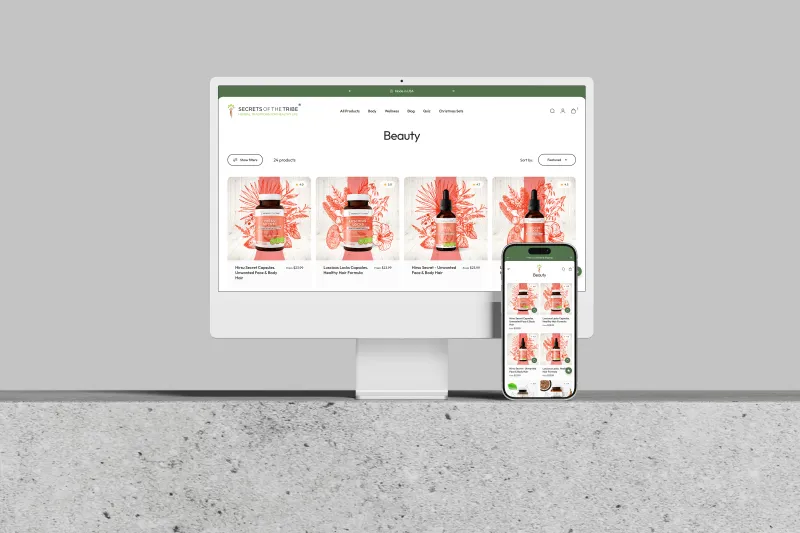
Secrets of the Tribe: From Basic Template to 49 Position 1 Rankings in 3 Months
#1 on Google for 49 searches in just 3 months

E-commerce SEO Case Study: From $28,800 in Annual Ad Spend to 7,500+ Monthly Organic Visitors
Stopped paying $2,400/month in ads, now gets 7,500 visitors free
 Featured
How a Forced Name Change Became the Best Thing That Happened to a Colorado Springs Epoxy Company
From invisible online to #1 across a 25-mile radius, fully booked, and expanding into commercial
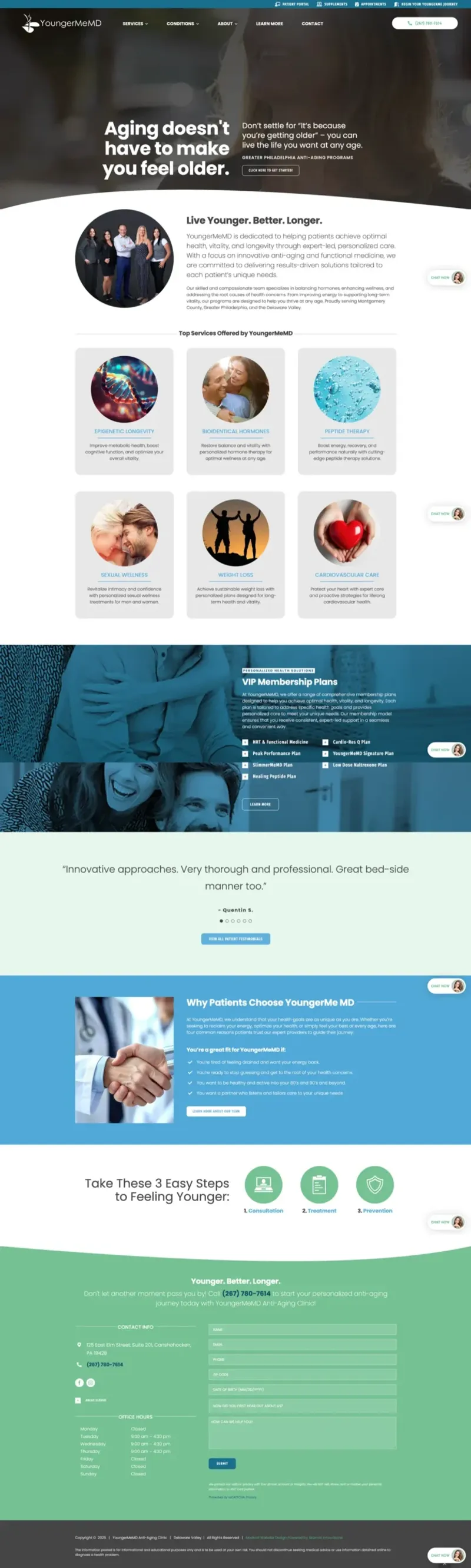
Website Redesign for a Regenerative Medicine Clinic That Actually Converts
Patients now book online instead of calling to ask questions
Ready for Results Like These?
Let's talk about how seo can drive real growth for your business.
Get a Free ConsultationSEO Articles
View All Posts »
The Complete SEO Guide for Small Businesses (2026)
Everything a small business owner needs to know about SEO in 2026. Real strategies, honest timelines, and actual results from businesses like yours.

How to Build a Local SEO Strategy That Actually Works in 2026
A comprehensive guide to local SEO in 2026, covering Google Business Profile optimization, citation building, review management, and the tactics that actually move rankings for small businesses.
SEO vs PPC – How to Choose the Right Strategy for Your Small Business Marketing
Should you invest in SEO or PPC for your small business? This comprehensive guide breaks down both strategies, their costs, benefits, and when to use each.

SEO Guide: Google's 2025 Quality Guidelines Explained for Business Owners
Learn how Google's E-E-A-T quality guidelines actually work and how to use them to outrank competitors in local search results.

10 Website Design Mistakes Killing Your SEO (2025)
Discover the most common website design mistakes that hurt your SEO rankings and learn how to fix them for better traffic and conversions.