What is Topical Authority?
TL;DR
Topical authority is Google's assessment of how deeply your website covers a specific subject area. A site with comprehensive, interlinked content covering all aspects of a topic will outrank a site with a single page on that topic, even if the single page is well-written. Building topical authority requires depth over breadth. It's better to be the definitive source on one topic than to superficially cover many.
On this page
Why Topical Authority Matters
Google's algorithm has evolved from matching keywords to understanding topics. In the early days of SEO, a single optimized page could rank for a keyword regardless of what else was on the site. Today, Google evaluates your entire site's coverage of a topic.
The compounding effect: Each piece of content you add on a topic reinforces every other piece. Your "how to fix a leaky faucet" guide helps your "best plumbing tools" page rank better, and vice versa. This is why niche sites often outrank giant generalist sites for specific queries.
The AIO connection: With AI-generated search results, topical authority matters even more. AI models like Google's SGE pull from sources they "trust" on a topic, and trust is built through comprehensive coverage, not single pages.
Real example: A local Denver plumbing company with 50 pages covering everything from drain cleaning to water heater installation to plumbing code requirements will outrank a national directory's Denver plumber listing page, even though the directory has higher domain authority overall.
How Topical Authority Works
Topical authority works through a concept called semantic SEO. Google understands that related topics belong together and expects authoritative sources to cover them comprehensively.
The Topic Cluster Model:
Pillar Content: A comprehensive guide covering the main topic broadly (e.g., "Complete Guide to Denver Plumbing")
Cluster Content: Detailed pages covering specific subtopics, each linking back to the pillar (e.g., "Tankless Water Heater Installation," "Drain Cleaning Services," "Emergency Plumbing Repairs")
Internal Links: Strategic Internal Linking connecting all cluster pages to the pillar and to each other where relevant
How Google evaluates topical authority:
- Coverage breadth: Do you address all the subtopics a searcher might need?
- Coverage depth: Is each subtopic thoroughly explained, not just mentioned?
- Internal structure: Are topics logically connected through internal links?
- External validation: Do other sites link to you for this topic?
- Freshness: Is content kept up-to-date?
- Consistency: Do you publish regularly on this topic?
The result: Google learns "this site is THE place for [topic]" and ranks you higher for related queries, even new pages you publish.
Topical Authority Best Practices
-
Map your topic comprehensively before writing. List every question someone might ask, every subtopic, every related concept. Tools like AnswerThePublic and 'People Also Ask' boxes help identify these.
-
Create a visual content hub. Link cluster pages to your pillar content and display related articles visibly on each page. Make the topical relationships obvious to both users and Google.
-
Cover topics your competitors miss. Use Content Gap analysis to find subtopics competitors haven't addressed. Being the only resource for a subtopic strengthens your authority on the entire topic.
-
Update existing content rather than creating new overlapping pages. If you already have a page on 'drain cleaning,' improve it rather than creating 'drain cleaning tips' and causing Content Cannibalization.
-
Earn topic-specific backlinks. When doing outreach or digital PR, focus on earning links from sites related to your topic. A plumbing blog linking to your plumbing content is worth more than a generic business directory.
-
Be patient. Topical authority compounds over time but takes months to build. Consistent publishing on a topic signals to Google that you're committed, not just chasing a trend.
Common Topical Authority Mistakes to Avoid
-
Spreading too thin. Trying to be authoritative on 20 topics means being authoritative on none. Better to dominate 3 topics than be mediocre at 20.
-
Orphan pages with no internal links. A page not connected to your topic cluster doesn't contribute to topical authority. Every page should link to and from related content.
-
Shallow cluster content. Writing 10 thin 300-word articles on subtopics doesn't build authority. It builds Thin Content problems. Each cluster page should be genuinely comprehensive.
-
Ignoring adjacent topics. If you're authoritative on 'plumbing,' you should also cover related topics like 'water quality' and 'home maintenance.' These adjacencies reinforce your core authority.
-
Publishing once and forgetting. Topical authority requires maintenance. If your competitors update their content and you don't, your authority erodes over time.
Recommended Topical Authority Tools
AI-powered platform that analyzes your topical coverage compared to competitors and identifies content gaps.
Content optimization tool with 'Content Audit' feature that evaluates your topic coverage and suggests missing subtopics.
Shows keywords competitors rank for that you don't, essential for building comprehensive topical coverage.
Rand Fishkin's educational videos, many covering topical authority and content strategy concepts.
Frequently Asked Questions About Topical Authority
How many pages do I need to have topical authority?
There's no magic number. It depends on the topic's complexity and competition. A narrow topic like 'artisan bread baking' might require 20-30 comprehensive pages. A broad topic like 'digital marketing' might require 100+. Focus on covering all subtopics thoroughly rather than hitting a page count.
Can I build topical authority with a new website?
Yes, though it takes longer than an established site. Start with a focused topic where you have genuine expertise. Publish consistently (weekly or biweekly). Interlink thoroughly from day one. New sites can establish topical authority in 6-12 months with consistent effort on a focused topic.
Does domain authority or topical authority matter more?
For specific queries, topical authority often wins. A niche site with DA 30 but deep topical authority can outrank a DA 70 generalist site. However, domain authority helps you rank faster for new topics. The ideal is both: high domain authority plus deep topical authority in your focus areas.
How do I measure my topical authority?
Track rankings for a cluster of related keywords, not just one. If you rank well for 'plumber Denver,' 'emergency plumbing,' 'water heater repair,' and 'drain cleaning' simultaneously, you have topical authority. Tools like Ahrefs let you track keyword groups and see if your cluster is strengthening over time.
Should I build topical authority before or after I've optimized existing pages?
Fix major issues first (technical problems, thin content, cannibalization), then build authority. There's no point publishing new content if your site has crawl issues or existing pages are competing with each other. Once the foundation is solid, adding content strategically builds authority.
Terms Related to Topical Authority
Content Gap
A content gap is a topic, keyword, or question that your target audience searches for but your website doesn't address,...
Read definition SEOE-E-A-T
E-E-A-T stands for Experience, Expertise, Authoritativeness, and Trustworthiness. It is Google's framework for evaluatin...
Read definition SEOInternal Linking
Links from one page on your site to another page on your site. Internal links help visitors navigate, distribute Page Au...
Read definition SEOKeyword Research
Finding out what your potential customers are already searching for, then building content that shows up when they searc...
Read definition SEO301 Redirect
A permanent redirect that tells browsers and search engines "this page has moved forever, go here instead." When someone...
Read definition SEO302 Redirect
A temporary redirect that tells search engines "this page has moved for now, but it's coming back." Unlike a 301 Redirec...
Read definitionFeatured SEO Case Study

How a CPA Firm Captured 991 Top-3 Google Rankings and 175 AI Overview Citations
Strategic website redesign and content architecture helped an established Colorado Springs CPA firm dominate both traditional search and AI-powered results, with 991 keywords in the top 3 and 175 AI Overview citations.
More SEO Case Studies
 Featured
Local SEO Case Study: From Invisible to #1 Across 100 Miles in 6 Days
From invisible to #1 across 100 miles in 6 days

How 50 Monthly Searches Turned Into a Fully Booked Consulting Business
From zero online presence to fully booked in 6 months, zero ad spend
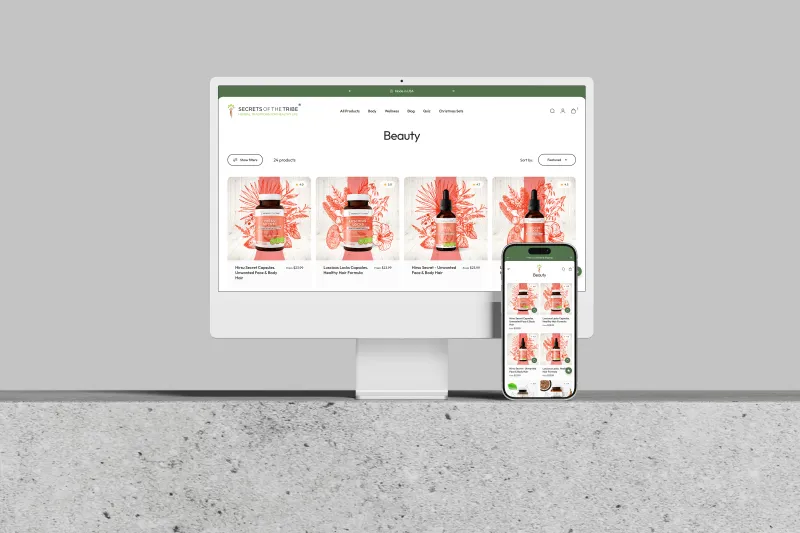
Secrets of the Tribe: From Basic Template to 49 Position 1 Rankings in 3 Months
#1 on Google for 49 searches in just 3 months

E-commerce SEO Case Study: From $28,800 in Annual Ad Spend to 7,500+ Monthly Organic Visitors
Stopped paying $2,400/month in ads, now gets 7,500 visitors free
 Featured
How a Forced Name Change Became the Best Thing That Happened to a Colorado Springs Epoxy Company
From invisible online to #1 across a 25-mile radius, fully booked, and expanding into commercial
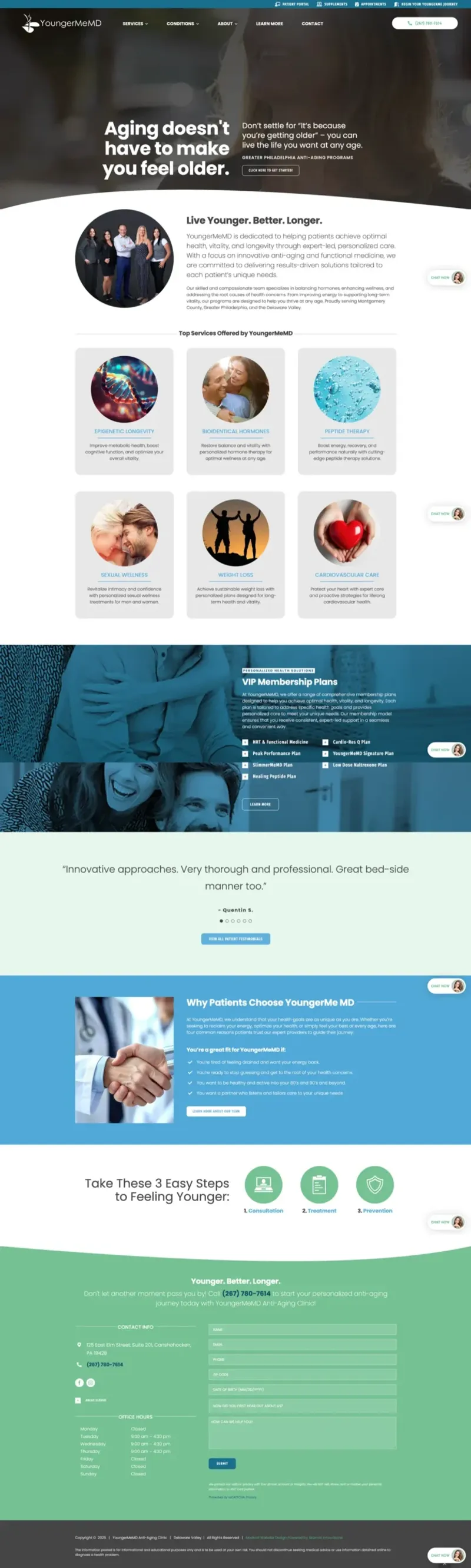
Website Redesign for a Regenerative Medicine Clinic That Actually Converts
Patients now book online instead of calling to ask questions
Ready for Results Like These?
Let's talk about how seo can drive real growth for your business.
Get a Free ConsultationSEO Articles
View All Posts »
The Complete SEO Guide for Small Businesses (2026)
Everything a small business owner needs to know about SEO in 2026. Real strategies, honest timelines, and actual results from businesses like yours.

How to Build a Local SEO Strategy That Actually Works in 2026
A comprehensive guide to local SEO in 2026, covering Google Business Profile optimization, citation building, review management, and the tactics that actually move rankings for small businesses.

SEO vs PPC – How to Choose the Right Strategy for Your Small Business Marketing
Should you invest in SEO or PPC for your small business? This comprehensive guide breaks down both strategies, their costs, benefits, and when to use each.

SEO Guide: Google's 2025 Quality Guidelines Explained for Business Owners
Learn how Google's E-E-A-T quality guidelines actually work and how to use them to outrank competitors in local search results.

10 Website Design Mistakes Killing Your SEO (2025)
Discover the most common website design mistakes that hurt your SEO rankings and learn how to fix them for better traffic and conversions.