On this page
Update, February 11, 2026: Tycoon Games is still outranking Amazon for “Everdell,” one of the most popular board games in the world. The screenshot below shows tycoongames.com sitting at position #2, above Amazon, Reddit, and every other retailer. The only site ahead? BoardGameGeek, the largest board game database on the planet, with decades of review content and community authority. They’ve earned that #1 spot with an incredible reviews ecosystem. We’re coming for them next, but it won’t be easy. That said, outranking Amazon on a competitive product keyword with a fraction of their budget? That’s what strategic SEO looks like.
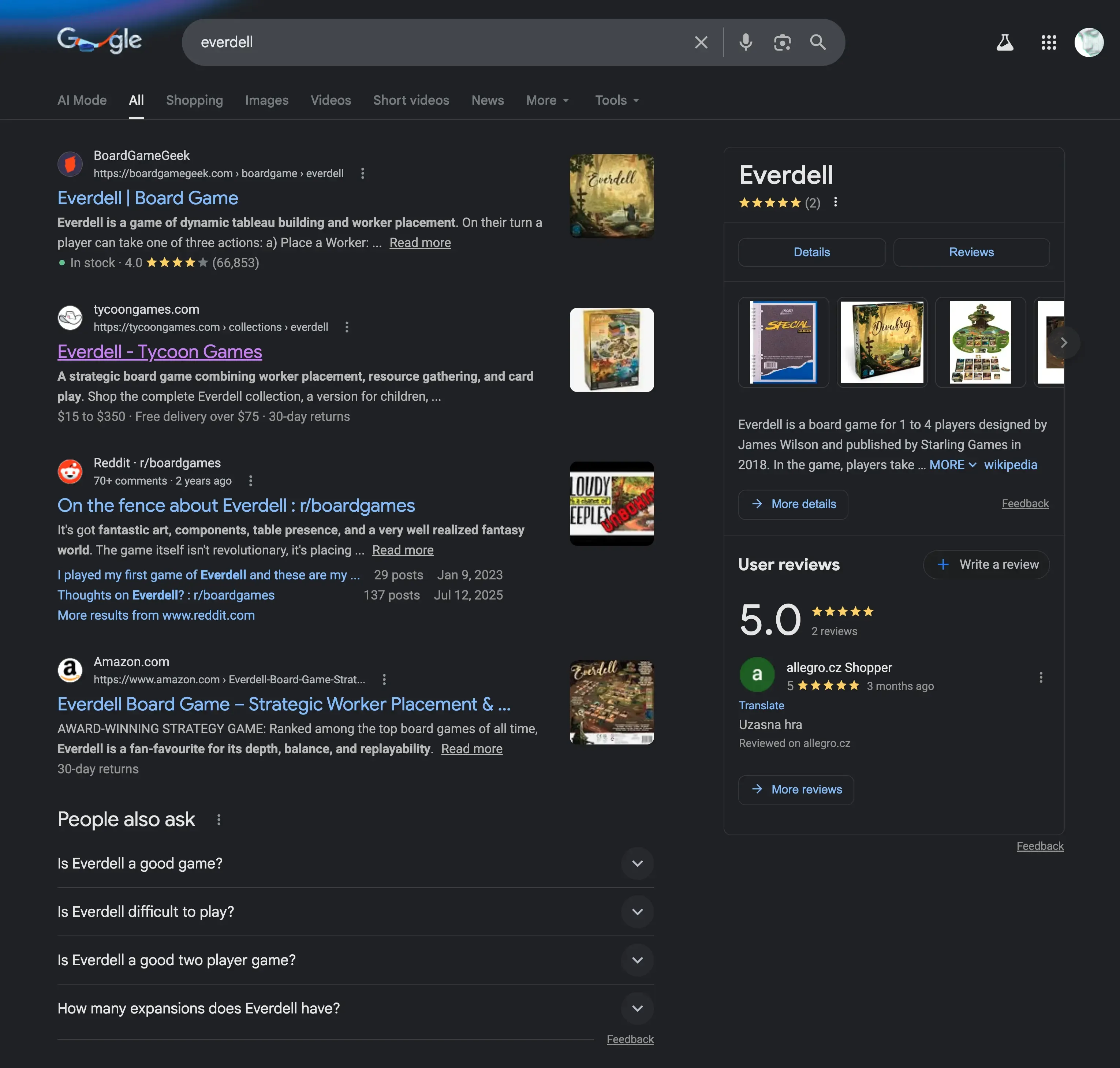 Google SERP for “Everdell,” February 11, 2026: Tycoon Games (#2) beating Amazon (#4), with only BoardGameGeek ahead.
The Numbers That Matter
| What Changed | The Result |
|---|---|
| Money Saved Per Year | $28,800 (ad spend eliminated) |
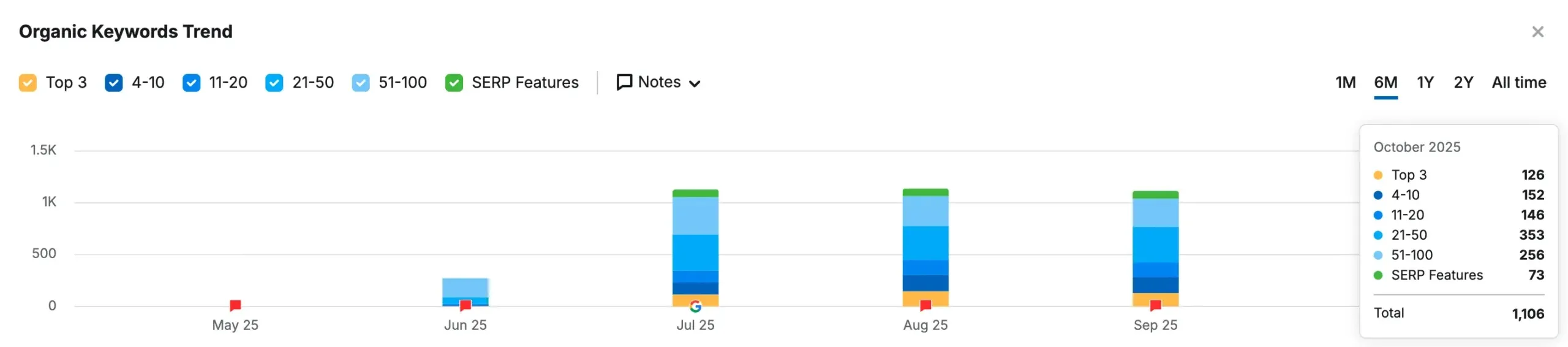
| Keywords Ranking | 1,106 |
| Top-3 Positions | 126 |
| Google Features Won | 73 (those special boxes at the top of results) |
| Monthly Visitors (Free) | 7,500+ |
| International Sales | 20+ countries (was 0) |
The Problem: $2,400 a Month Just to Be Visible
Tycoon Games was spending $2,400 every month on Google Ads. That’s $28,800 a year just to show up when people searched for board games.
The worst part: the moment they stopped paying, the traffic vanished. Every click was rented. Nothing was owned.
The e-commerce space for board games is brutal. Amazon owns “buy board games online.” Target, Walmart, and specialty retailers dominate every broad search term. Cost-per-click runs $3-8 normally and spikes above $12 during holiday shopping seasons.
Tycoon Games had a new domain with zero authority. Zero organic visibility. They were completely dependent on paid traffic to survive.
This is the trap most small e-commerce businesses fall into. Paid ads become the only lifeline. You pay to stay visible today, then you pay again tomorrow. The bills never stop.
Think about it this way: $28,800 per year in ads is rent. You pay it, you get traffic. Stop paying, traffic disappears. SEO is ownership. You invest, you build an asset. That asset keeps working even when you stop paying.
This Works Well For
This case study is most relevant if you:
- Run an e-commerce store spending $1,500+ monthly on Google Ads
- Sell products in a niche where Amazon dominates the broad terms
- Want to reduce your ad dependency but are afraid to go dark
- Have tried SEO before and it “didn’t work”
- Need to compete with big-box retailers on a small business budget
- Want to expand internationally but don’t know where to start
Industry fit:
- Specialty retail (board games, hobby supplies, crafts, sporting goods)
- Niche e-commerce (specific product categories vs. general stores)
- Product businesses with margins that can’t sustain high CPCs forever
- Stores with 50+ SKUs and category pages to optimize
This probably isn’t your situation if:
- You sell one product on a single landing page
- Your margins are so thin that any marketing spend is impossible
- You need revenue next week, not next quarter
- Your product doesn’t have search demand (people aren’t Googling for it)
The Strategic Insight: Stop Fighting Battles You Cannot Win
Most e-commerce SEO agencies get this wrong: they chase the big keywords.
“Buy board games online.” “Best board games.” “Board games for sale.”
These terms have millions of searches. They’re also impossible. Amazon has been building authority on these terms for two decades. You’re not going to outrank them. Ever.
So I don’t try.
The strategy for Tycoon Games focused on specific niches. Long-tail keywords the giants ignore because the search volume is “too low” for them to care about.
Terms like:
- “Best 2-player cooperative strategy games under $40”
- “Board games for couples date night”
- “Party games for 8+ players adults”
Each of these terms might only get 200-500 searches per month. But they have something Amazon’s generic product pages don’t have: buyer intent.
Someone searching “best 2-player cooperative strategy games under $40” knows exactly what they want. They’re ready to buy. They just need to find the right store.
That’s where Tycoon Games shows up now.
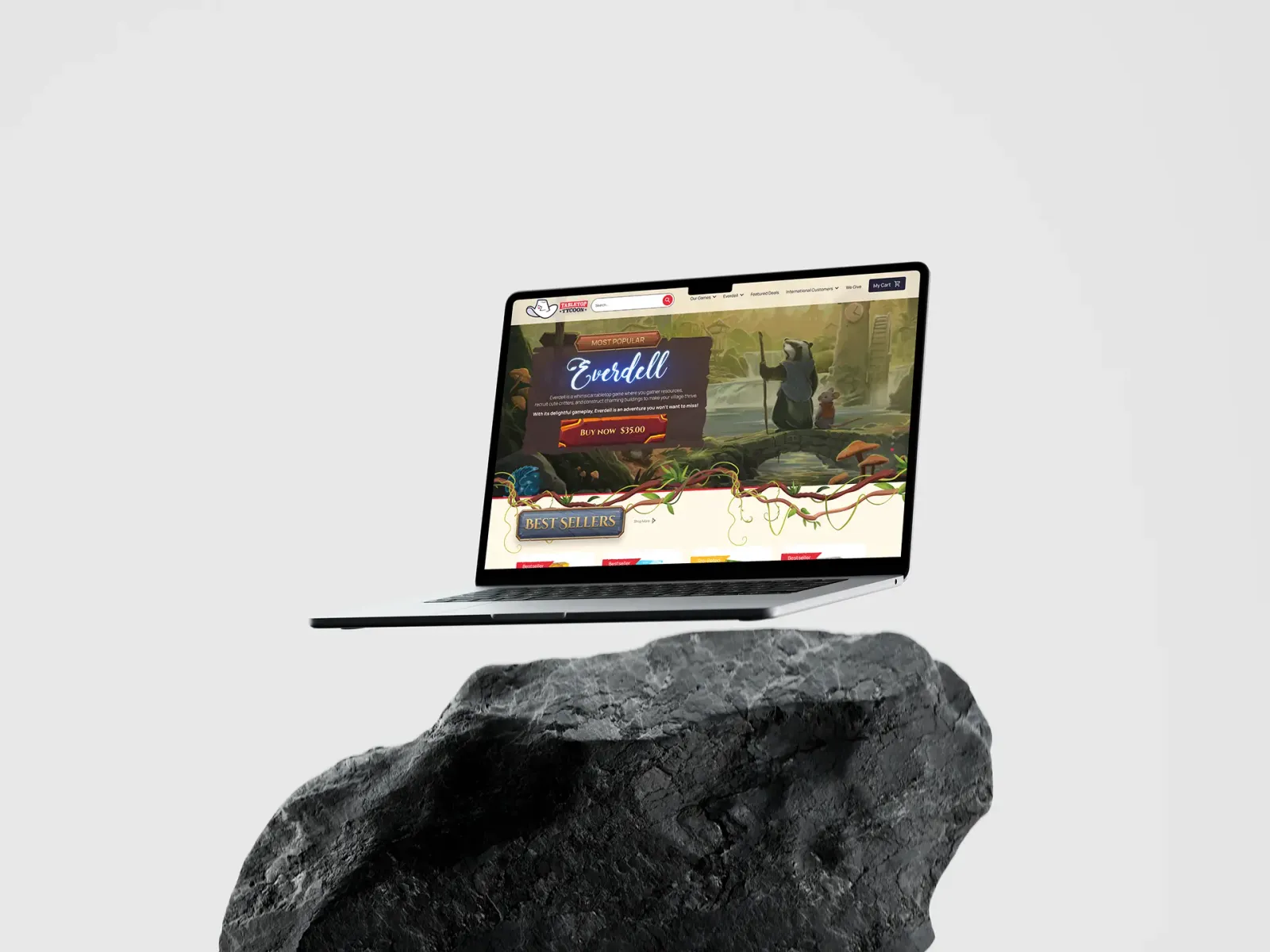
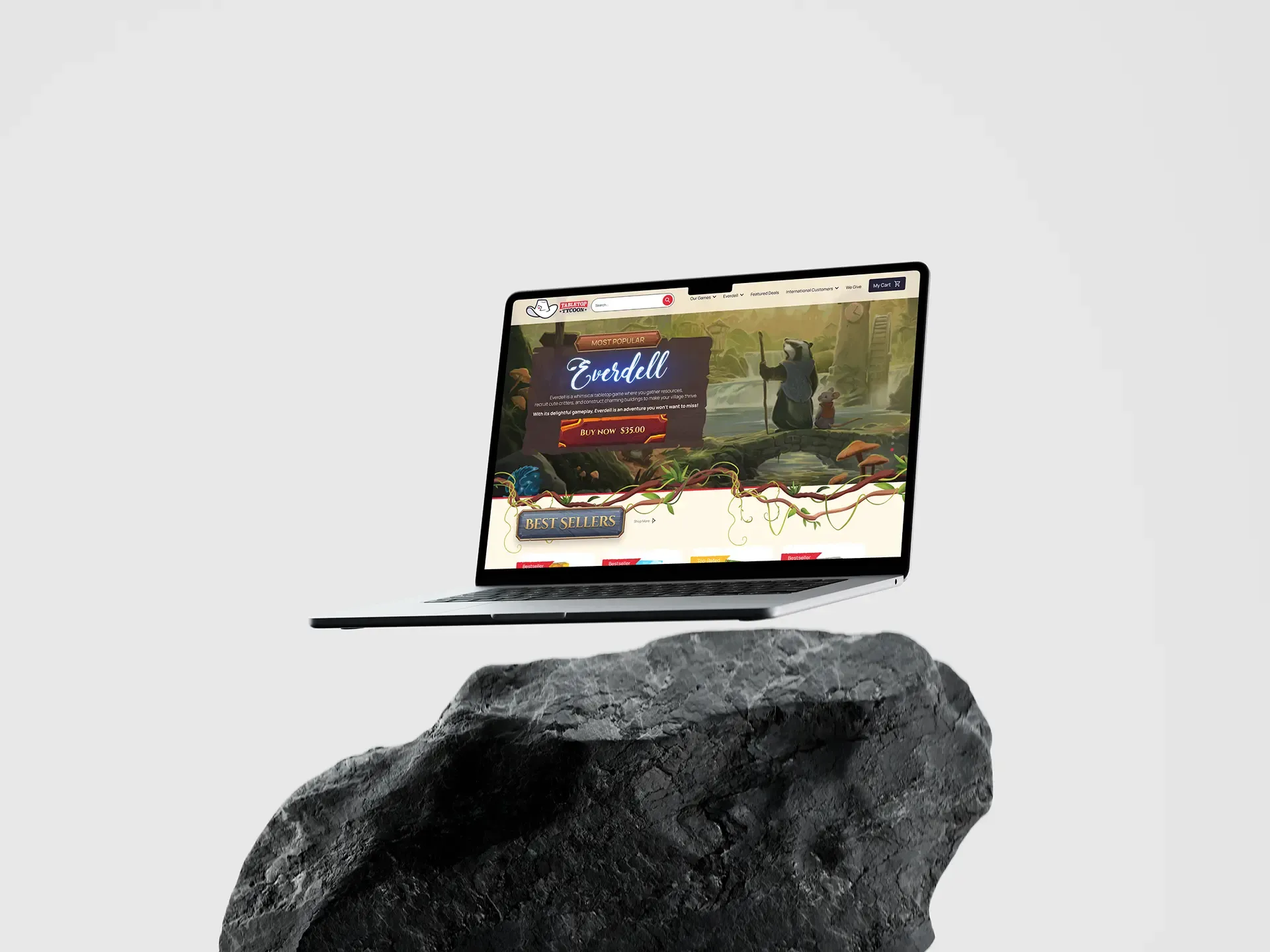 The finished product: A mobile-first e-commerce experience that converts high-intent searchers into buyers.
What We Actually Did
This project was a collaboration. I handled the website design, user experience strategy, SEO strategy, and content optimization. My development partner, ESEO Space, built the Shopify infrastructure, handled performance optimization, and executed the technical implementation.
We’ve worked together for over 4 years. They’re the technical team I trust for complex e-commerce builds.
Built for Phones First
68% of e-commerce traffic comes from mobile devices. Yet most Shopify stores are designed for desktop and “adapted” for phones as an afterthought.
I built Tycoon Games mobile-first. Every design decision started with the phone experience. Desktop was the adaptation, not the other way around.
The business result: 61% of Tycoon Games revenue comes from mobile. Their mobile conversion rate is within 3% of desktop. The industry average gap is 15-20%. That difference alone represents thousands of dollars in recovered sales that most stores lose.
 Mobile-first design: Clean navigation, clear CTAs, optimized for thumb-friendly browsing.
Content That Answers Real Questions
Every product category page was built around what buyers actually search. Not just “strategy games” but “best strategy games for beginners” and “2-player strategy games for couples.”
The content answered the questions people actually ask before buying. Not generic product descriptions, but genuine buying guidance.
The business result: People find Tycoon Games when they’re ready to buy, not just browsing.
International SEO Built In From Day One
Most e-commerce sites add international targeting as an afterthought. By then, the technical debt makes it expensive and slow to fix.
I built international SEO into the foundation. Proper language and region targeting for 20+ markets. Currency and language visibility. International shipping shown upfront.
The business result: 18% of Tycoon Games revenue now comes from international customers. Previously, that number was zero.
Fast Loading Pages
Google uses page speed as a ranking factor. For e-commerce, slow pages mean high bounce rates and lost sales.
ESEO Space optimized the Shopify build for performance:
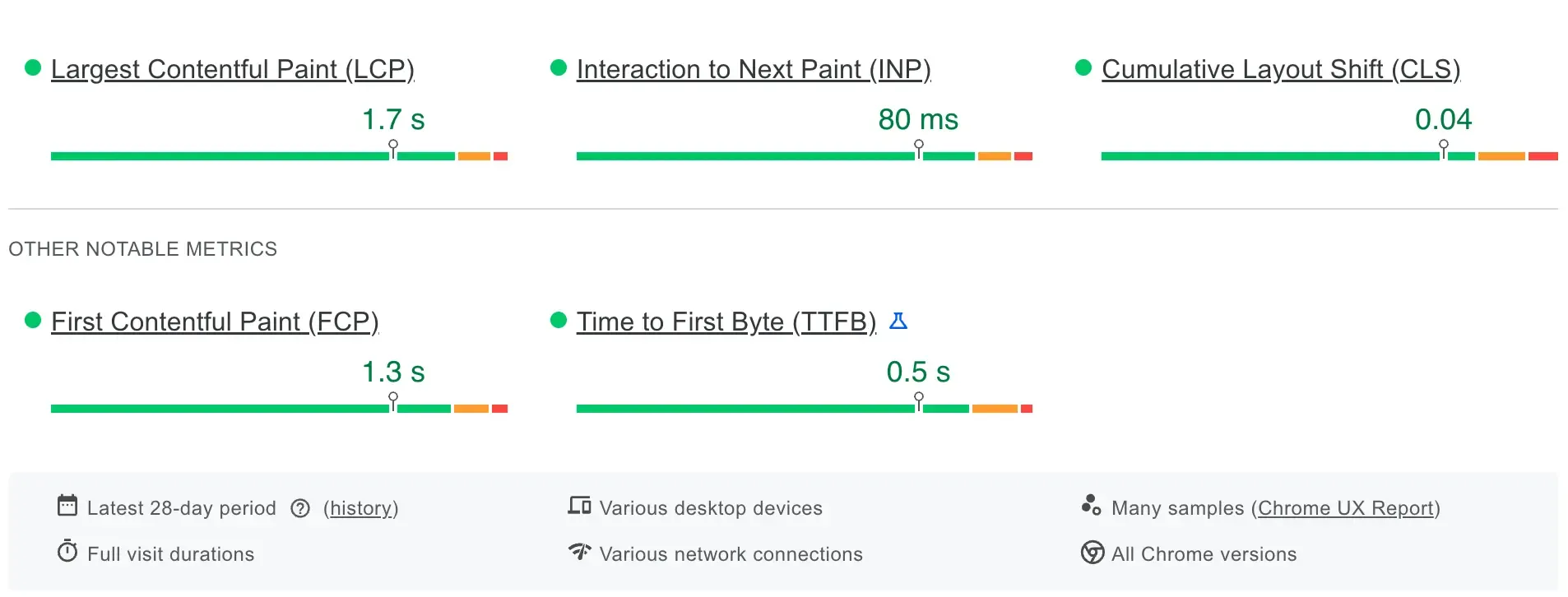
- Desktop: LCP 1.7s, FCP 1.3s, CLS 0.04, TTFB 0.5s
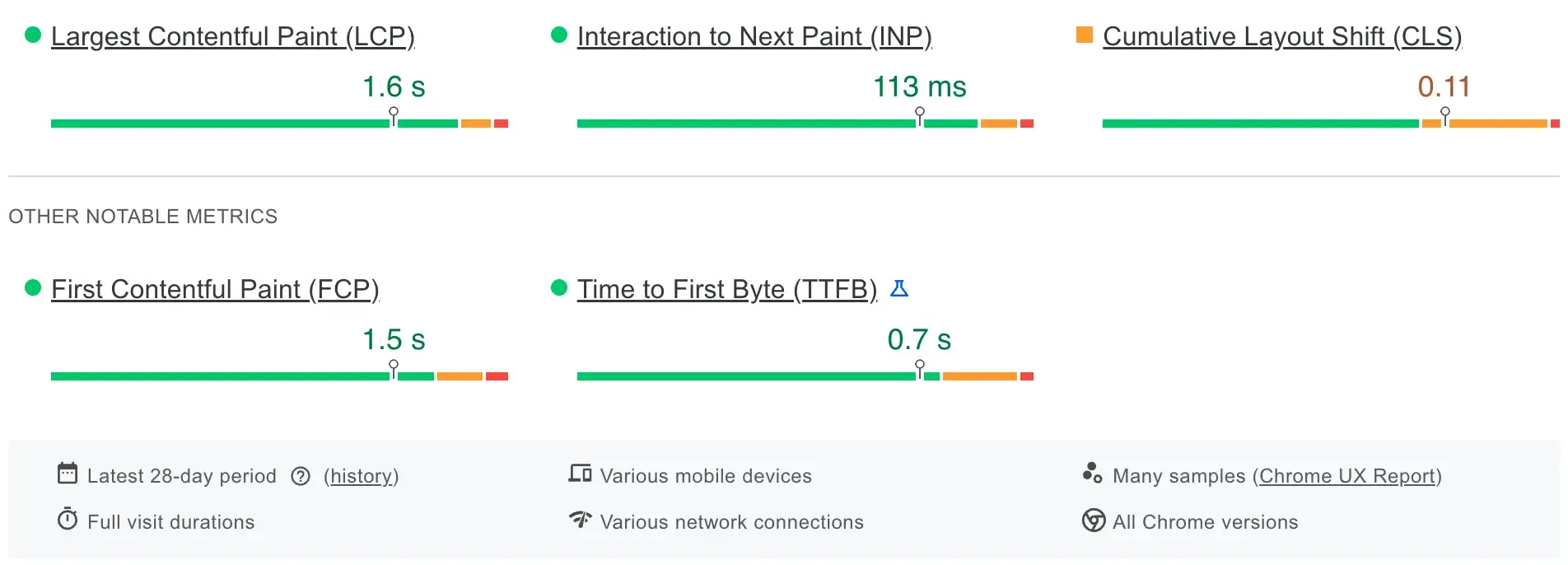
- Mobile: LCP 1.6s, FCP 1.5s, INP 113ms, TTFB 0.7s
 Desktop PageSpeed: Passing Core Web Vitals with room to spare.
 Mobile PageSpeed: Fast loading times that contribute to better rankings and conversions.
These aren’t vanity metrics. Fast pages rank better and convert better. Both matter for e-commerce.
The Results: 5 Months to Transformation
What Rankings Mean in Real Terms
Within 30 days of launch, Tycoon Games had 115 top-ranking keywords. Most new sites take 3-6 months to see any movement at all.
By month 5:
- 1,106 total ranking keywords
- 126 top-3 positions (including high-value commercial terms)
- 73 Google features captured (those special boxes at the top of results)
But rankings alone don’t pay bills. These rankings translate to buyers, not just browsers.
The Money Results
- 7,500+ monthly organic visitors (and growing)
- $28,800 annual ad spend completely eliminated
- 20+ international markets with active rankings
- 18% of revenue from international (was 0%)
Tycoon Games stopped paying for Google Ads entirely at month 5. Organic traffic had grown enough to exceed what paid ever delivered. And it continues to grow.
Why Mobile Matters
- 68% of traffic is mobile
- 61% of revenue is mobile
- Mobile conversion rate within 3% of desktop
- Average session time over 3 minutes
That last stat matters. People don’t just click and leave. They browse. They explore. They buy.
The Takeaway: Own Your Traffic
The lesson from Tycoon Games applies to any e-commerce business trapped in the paid ads cycle:
You don’t have to compete where you can’t win.
Amazon owns the broad terms. Let them have them. Find the specific niches they ignore. Lower search volume, higher buyer intent, better conversion rates.
$2,400 per month in ads is $28,800 per year you never get back. That same investment in SEO builds an asset. Rankings that persist. Traffic that arrives without a credit card charge.
The ad money for Tycoon Games is gone forever. The rankings? They own those. Even if we stopped working together tomorrow, that organic visibility doesn’t disappear the way ad traffic does.
That’s the difference between renting and owning.
The Real Math: Rent vs. Own
Here’s how to think about this for your own business:
| Google Ads (Rent) | SEO (Own) | |
|---|---|---|
| Year 1 Cost | $28,800 | ~$30,000-40,000 |
| Year 2 Cost | $28,800 | ~$15,000-25,000 (maintenance) |
| Year 3 Cost | $28,800 | ~$15,000-25,000 (maintenance) |
| 3-Year Total | $86,400 | ~$60,000-90,000 |
| What You Own After 3 Years | Nothing | 1,106+ rankings, 7,500+ monthly visitors, 18% international revenue |
| What Happens If You Stop Paying | Traffic disappears immediately | Rankings persist for months/years |
The first year costs are similar. But by year 2, SEO starts winning. By year 3, you’ve built an asset that keeps producing even when you reduce investment.
Ads are an expense. SEO is an investment.
About the Partnership
This project was a collaboration between two specialized teams:
Digital Marketing Services (DMS):
- Website design and user experience strategy
- SEO strategy and keyword research
- Content optimization
- International SEO architecture
ESEO Space:
- Shopify development and customization
- Performance optimization
- Technical SEO execution
- Page speed implementation
I’ve worked with ESEO Space for over 4 years. When e-commerce projects require complex technical execution, they’re the team I bring in. This model works because each team focuses on their specialization rather than trying to do everything.
The result is a site that looks great, ranks well, loads fast, and converts visitors into customers.
Common Questions
Frequently Asked Questions
Tycoon Games stopped Google Ads entirely at month 5. The transition was gradual. As organic traffic grew, ad spend decreased. I didn't cut ads cold turkey and hope for the best. I reduced them as organic proved it could replace the volume.
Not head-on. Amazon owns "buy board games online." But they don't own "best 2-player cooperative strategy games under $40." The strategy is finding specific niches the giants ignore. You're not fighting Amazon. You're going where they aren't looking.
Proper language and region targeting built into the site from launch. Most e-commerce sites add international as an afterthought. By then, retrofitting is expensive and slow. I built it into the foundation from the start.
68% of Tycoon Games traffic is mobile. If mobile experience is poor, you're losing the majority of your potential customers. Closing the mobile/desktop conversion gap is often worth more than ranking for additional keywords. That's real money recovered.
Google uses page speed as a ranking factor. For e-commerce, slow product pages mean higher bounce rates and lower rankings. It's a double penalty. Tycoon Games passes all Core Web Vitals on both desktop and mobile (LCP 1.6s, CLS 0.04), which contributed to faster ranking improvements and better conversion rates.
1,106 ranking keywords means nothing if they don't convert. Lots of agencies celebrate keyword counts while the client's phone stays quiet. I targeted buyer-intent keywords specifically. That's why 7,500 monthly visitors translates to actual orders, not just traffic numbers.
For a new domain, yes, if the strategy is right. Tycoon Games saw 115 top-ranking keywords within 30 days of launch. That's possible because I targeted low-competition, high-intent terms first. The bigger wins in competitive terms came in months 3-5 as authority built.
The rankings are an asset you own. Unlike ads that disappear the moment you stop paying, organic rankings persist. They may slowly decline without maintenance, but the foundation stays. You're not starting from zero if you pause and restart later.
Design and SEO were integrated from day one. Mobile-first architecture, fast loading times, and conversion-optimized layouts all contribute to SEO performance. A beautiful site that loads slowly won't rank. A fast site with poor user experience won't convert. You need both.
That's exactly what this case study shows. You don't go dark during the transition. Build organic visibility while maintaining ads. Reduce ad spend as organic takes over. By month 5, Tycoon Games was comfortable turning ads off completely because organic had proven it could carry the load.
Not Ready Yet?
That’s okay. Here’s how to prepare for when you are.
Do this now (free):
- Check your current Google Ads spend for the last 12 months. Add it up. That’s your “rent” number.
- Look at your organic traffic in Google Analytics. If it’s less than 20% of paid traffic, you’re vulnerable.
- Search your top 5 products on Google. Note where you rank (or if you rank at all).
Questions to answer before we talk:
- How much are you spending monthly on Google Ads?
- What’s your current organic traffic vs. paid traffic split?
- Are you selling internationally, or only domestically?
- What’s your average order value?
When the timing is right: I’m happy to take an honest look at whether SEO makes sense for your specific situation. No obligation, no pressure.
Some businesses should keep running ads. If your margins are thin and you need every sale this week, SEO isn’t your solution right now. I’ll tell you that.
But if you’re spending $1,500+ monthly on ads and want to know if there’s a better path, let’s talk about what’s possible.
Case study by
Kristian Kreaktive
Founder & Lead Strategist at Digital Marketing Services
17+ years of experience helping small businesses grow their online presence through strategic SEO, web design, and branding.

In collaboration with
eSEO Space
Design & Development
This project was created in collaboration with eSEO Space, combining our strategic approach with their technical expertise to deliver exceptional results.
Learn more about our partnershipMore SEO Success Stories
 Featured
How a CPA Firm Captured 991 Top-3 Google Rankings and 175 AI Overview Citations
991 keywords in top 3, 175 AI Overview citations
 Featured
Local SEO Case Study: From Invisible to #1 Across 100 Miles in 6 Days
From invisible to #1 across 100 miles in 6 days
How 50 Monthly Searches Turned Into a Fully Booked Consulting Business
From zero online presence to fully booked in 6 months, zero ad spend